
Choosing an orthodontist is one of those decisions that feels simple on the surface and turns out to be more consequential than expected. Treatment lasts anywhere from one to three years. You’re visiting the practice regularly. Your child’s smile — and in some cases yours — is the result. Getting this right matters.
In a region like Silicon Valley, where parents are accustomed to researching decisions carefully and expectations for service and quality run high, it’s worth knowing what to actually look for. Price and proximity are easy to compare. The things that actually determine outcomes are harder to find on a website.
Here’s what to pay attention to.
Board Certification and Specialized Training
There’s an important distinction between a dentist who offers orthodontic services and a dedicated orthodontic specialist. An orthodontist completes dental school followed by an additional two to three years of specialized residency training focused entirely on tooth movement, jaw development, and bite correction. That training is the foundation of everything else.
Board certification from the American Board of Orthodontics is an additional credential that only a fraction of orthodontists pursue — it involves written and clinical examinations and ongoing recertification. It’s a meaningful signal that a provider holds themselves to a standard beyond what’s required to practice.
When researching practices, look for clear information about the treating orthodontist’s credentials, training, and continuing education. A practice that’s proud of its clinical standards will make that information easy to find.
Technology and Treatment Approach
Orthodontics has changed significantly in the past decade, and the technology a practice uses has a real impact on your experience and your results.
Digital scanning — like the iTero scanner used at Boschken Orthodontics — eliminates the uncomfortable goopy mold impressions that used to be standard. The scanner creates a precise 3D model of your teeth in minutes, which is used for treatment planning, Invisalign fitting, and monitoring progress. It’s faster, more accurate, and significantly more comfortable.
LightForce braces are another example of how technology is advancing outcomes. Unlike traditional metal brackets, which come in a limited number of standard shapes, LightForce brackets are 3D-printed for each individual patient’s tooth anatomy. The result is a more precise fit and potentially more efficient tooth movement. Not every practice offers LightForce — it requires specific training and investment in the system.
Ask any practice you’re considering what technology they use for scanning, treatment planning, and monitoring — and why. A practice that can explain their clinical reasoning is one that thinks carefully about how they work.
Invisalign Provider Status — What It Actually Means
If Invisalign is on your radar for yourself or your teenager, the provider’s experience level is worth understanding. Invisalign designates its providers by tier based on annual case volume — from basic providers up through Diamond Plus, which represents the top fraction of providers nationwide.
Higher-tier providers treat more Invisalign cases, which means more experience across a wider range of case types and complexities. A Diamond Plus provider has managed difficult cases that a lower-volume practice may not have encountered. That experience is what allows an orthodontist to say with confidence that Invisalign is or isn’t the right tool for a particular case — and to use it well when it is.
Dr. David Boschken is a Diamond Plus Invisalign Provider, placing Boschken Orthodontics among the highest-tier practices in the San Jose and Los Altos area. That standing is renewed based on ongoing case volume, so it reflects current practice, not a credential from a decade ago.
The Consultation Experience
A complimentary initial consultation is standard practice in orthodontics, and it tells you a lot. Pay attention to how the conversation goes.
Is the orthodontist taking time to actually examine your child’s teeth, or does it feel like a brief formality before the treatment plan paperwork appears? Are they explaining what they see and why they’re recommending what they’re recommending? Are they giving you an honest answer about timing, or pushing to start immediately regardless of your child’s age or readiness?
A good orthodontist will tell you if now isn’t the right time to start. That’s not a sign of disinterest — it’s a sign of integrity. Treatment that starts at the right moment is treatment that goes better.
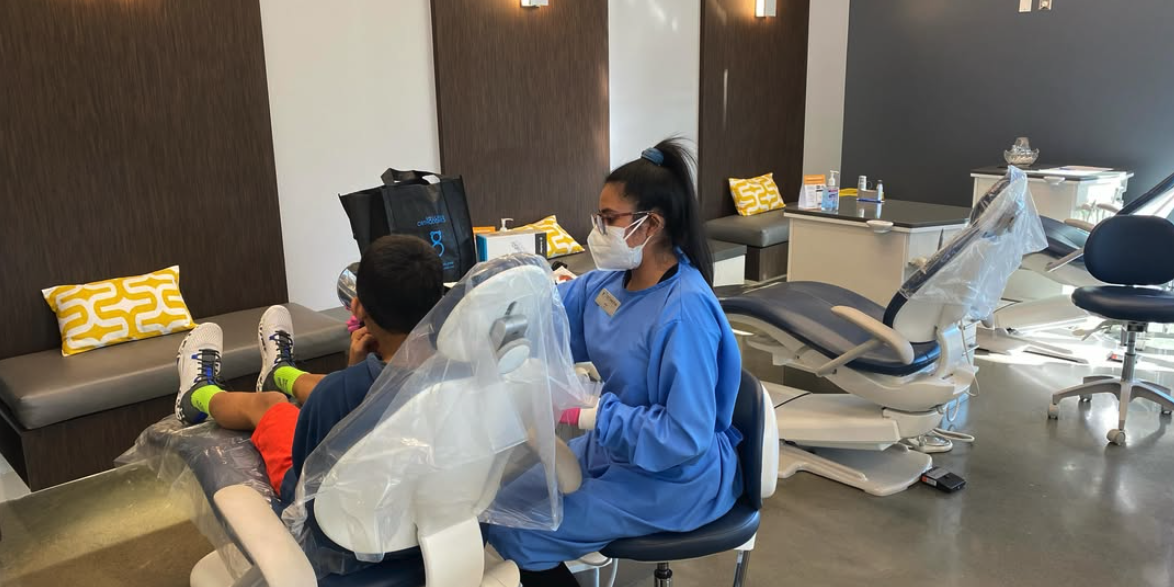
Also, notice the environment. Is the team friendly and organized? Do they seem to know their patients? For a treatment relationship that will last one to three years, the feel of a practice matters more than it might seem in a fifteen-minute consultation.
Questions Worth Asking Before You Commit
Going into a consultation with a few specific questions can help you evaluate the practice beyond the first impression:
Who will be doing my child’s treatment? In most practices, much of the hands-on work is delegated to assistants, with the orthodontist overseeing it. Check to see if the case will be monitored by one orthodontist. Confirming who is primarily responsible for your care is a fair and important question.
What happens if something comes up between appointments? Ask about their process for broken brackets, lost aligners, and urgent concerns. A practice with a clear, responsive protocol for unexpected situations is one that will take care of you when you need it.
What does the treatment timeline look like for my child’s specific situation? Generic timelines are less useful than a real conversation about your child’s case. An orthodontist who can give you a specific, reasoned answer is one who’s actually looked at your child’s teeth.
Do you offer flexible payment options? Quality orthodontic treatment is an investment. Practices that want to make treatment accessible will typically offer in-house payment plans or work with flexible spending accounts. It’s worth asking how they structure payment and what options exist.
Why the Cheapest Option Isn’t Always the Best Value
Orthodontic treatment is one of those areas where the long view matters. A less expensive treatment plan that results in poor alignment, bite issues, or extended treatment time can cost more in the end — both financially and in terms of your child’s experience.
In a region where many families have access to the best of everything professionally and personally, it’s worth applying the same standard to healthcare decisions. The right orthodontist isn’t the one with the lowest fee — it’s the one with the training, the technology, and the approach to deliver the result you’re looking for.
That said, a quality practice should be transparent about costs upfront and willing to work with you on payment. Expensive doesn’t automatically mean excellent. The goal is value — which means results, experience, and a relationship you trust over the course of treatment.
Choosing Boschken Orthodontics
Dr. David Boschken has been providing orthodontic treatment in Los Altos and San Jose for over two decades. His practice serves families from throughout the Bay Area — including Los Altos, San Jose, Palo Alto, Mountain View, Cupertino, Sunnyvale, Willow Glen, and surrounding communities.
The practice offers complimentary consultations, flexible payment options, and a team that’s built around making every patient feel like part of the Boschken family. If you’re in the process of choosing an orthodontist for your child — or for yourself — we’d be glad to be one of the practices you consider.
Schedule your complimentary consultation online or call either of our locations to get started.